

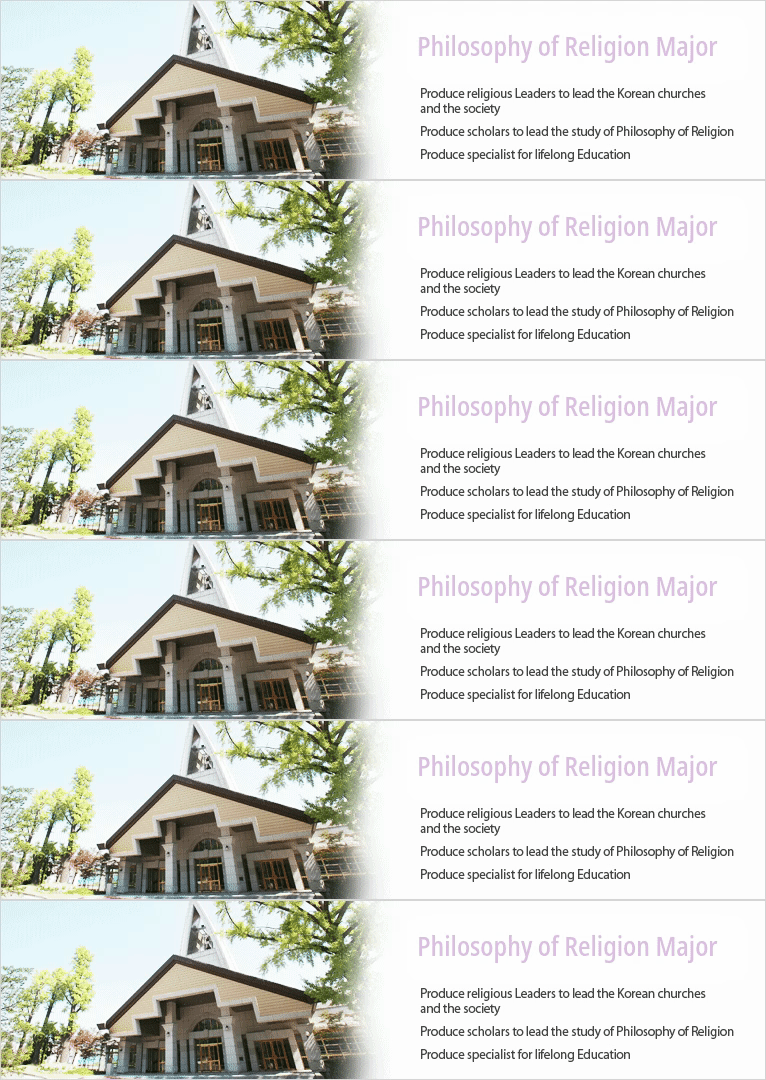
Philosophy of Religion Major
Introduction
Established in 1982, the Philosophy of Religion major at MTU is not only the first of its kind in Korea but also one of the very few undergraduate programs worldwide dedicated to this field. Recognizing the need for leaders equipped with both spiritual depth and intellectual breadth, MTU established this major to prepare future Christian leaders capable of engaging critically with diverse academic disciplines and worldviews. Modern spiritual and moral leaders must possess a wide range of knowledge and cultural literacy that extends beyond theology alone. The Philosophy of Religion major responds to this need by training students who aspire to ministry, missionary work, worship leadership, or other fields requiring both spiritual maturity and philosophical insight. Through the integrated study of faith, reason, and culture, students develop the intellectual resources to think deeply, act wisely, and serve faithfully in today’s complex global society.
Educational Goals
The Philosophy of Religion major fosters an interdisciplinary and integrative academic approach by engaging theology, philosophy, and religious studies from both Eastern and Western traditions. The program pursues three primary goals:
- To cultivate pastors and religious leaders with a broad liberal arts education grounded in Christian spirituality and philosophy
- To equip students to engage critically with contemporary secular thought and respond faithfully to intellectual challenges facing Christianity
- To expand students’ understanding of world religions—such as Confucianism, Buddhism, Islam, and Judaism—in order to foster interreligious dialogue and global mission competence
Curriculum Overview
The curriculum of the Philosophy of Religion major provides both theological and philosophical foundations while encouraging broad academic exploration. Students gain:
- Core theological training in areas such as biblical studies, Christian history, and ethics
- Broad study of philosophy, including logic, metaphysics, epistemology, and ethics
- Practical ministry preparation through courses in pastoral counseling, preaching, and worship
- Engagement with the wider intellectual world, including the academic study of world religions, philosophy of science, and cultural theory
As a program within a theological university, the major integrates philosophical and cultural studies with Christian theology. The program seeks to develop thoughtful responses to the intellectual and moral challenges of modern society. Students are encouraged to explore how faith interacts with science, culture, and contemporary human issues, preparing them for ministry and scholarship that address the needs of the modern world.
Career Pathways
Graduates of the Philosophy of Religion major pursue diverse professional callings, including:
- Ordained ministry or missionary service within the Korean Methodist Church and other denominations (typically after completing graduate-level theological study)
- Opportunities for intercultural and interreligious mission work in global contexts
- Religious and cultural leadership, including roles in Christian media, education, publishing, and cultural ministries
- Advanced academic study in theology, philosophy, or religious studies, both in Korea and abroad
Graduates also pursue careers in creative and public sectors, where theological insight and philosophical training contribute to journalism, film, education, and public service.
Academic Vision
The Philosophy of Religion major serves as a vital bridge between faith and reason, theology and culture. By nurturing both spiritual insight and critical reflection, the program develops leaders who can engage constructively with diverse worldviews while remaining grounded in Christian conviction. Graduates leave MTU prepared not only to serve the church but also to contribute meaningfully to the moral, intellectual, and cultural transformation of society.
